Showing posts with label Books 101. Show all posts

Top Ten Best Authors for Media Saturated Kids


Maybe you want to give a child a book for a gift but you are worried that the book will get tossed into a pile of irrelevancy in favor of Junior's tablet or the new video game his much cooler aunt bought him.  Maybe your own child has been fed too many cartoons on the tube.  It's okay; I won't tell. But now, our media saturated children are rather uninterested in the written word— especially when it competes with flashy animations. After all, you can give a kid books, but you can't make them like 'em... much less even read them.  But I have come to give you hope and have it in abundance.

Before we can expect a media glutton to love the beauty of simple things like Make Way for Ducklings or Stone Soup, we have to ease them into the transition of still life and still ink on still paper.  In response to this need for a segue, publishers have been printing a bloated genre of books that supposedly children will love but typically parents hate. These generally include sharp, digital illustrations, flatulence, underpants, aliens and/or mucous emissions. I suppose the idea is that the shock value of these things will get kids reading. Toilet humor—especially to boys— is highly appealing.  So the battered down, desperate parent feels it's their only hope to get Junior interested in books.  It's not the only hope... but I'm not going to lie and say that you can just give a child a classic book and expect them to swoon over it.  This is very much like very picky eaters who've been given too much junk food and refuse all their vegetables. Once the intellectual appetites have been soiled (in this case by too much electronic stimulation) it is very difficult to reorder it to enjoying the wholesome books. Difficult... but not impossible. The first thing to do is eliminate or drastically limit media of course.  Otherwise, no matter how good your intentions, books will always lose to the drug inducing power of TV (video games are even more destructive). Then, find some good books to introduce.

Thankfully, there are a number of excellent authors out there who are especially well suited to "reordering appetites."  Think of them as a good probiotic or something... replenishing the gut with good bacteria (all right enough of the food analogies). Like all my Top Ten lists, this isn't an exclusive compilation; there are certainly other books and authors that would make for great transitions. The things to look for are humor, weird or unexpected plots, interesting typeset, detailed pictures, and/or novel or irresistible concepts.  Believe it or not, these things can be found without resorting to pooping, iPad wielding aliens in underwear.

After the child has been fed a good diet of these transitional books, they can slowly move onto realizing that there are some true delights to be found in picture books and they'll want to explore more—even ones with less catchy covers.

So here is my list of the authors to look out for once you decide to move away from media and into the glory of the printed word.
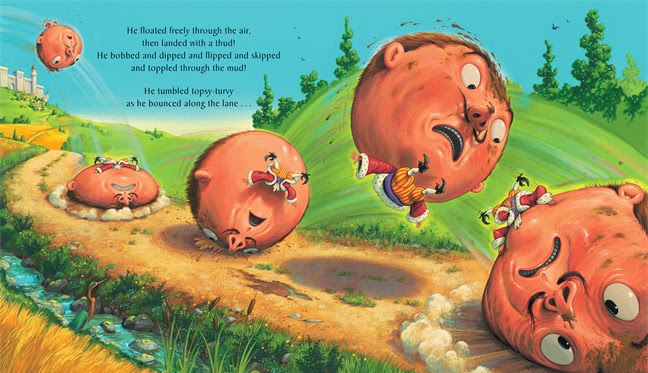

Chris Van Dusen. Van Dusen has the most excellent illustrations to captivate an unsuspecting media glutton. His style LOOKS animated and he's got a superb natural rhyming that fits all his books so well. If I Built a House would make for a perfect "starting over" book to try and hook kids into the adventures in reading.  And  Randy Riley's Really Big Hit also has really big appeal. Be sure to also read all the Mr. Magee stories too!

David Weisner.  Weisner is the wordless book master and as we all should know by now, wordless books are not just for kids. Tuesday is his classic tale of bizarre flying frogs but Sector 7 and all his other titles certainly shouldn't get lost in the shuffle either.  These books are great ones for bored children to just "discover" lying about on an end table somewhere.


Lynley Dodd.  Dodd isn't so well known in the states for some reason but her Hairy Maclary is quite well known in her New Zealand homeland and elsewhere.  ALL of her books are great.  She has an extraordinary talent for rhyming and for made-up words that just roll off you tongue with delight.  These books are best read aloud and with enthusiasm to capture the full cadence.


Oliver Jeffers. A favorite among boys especially.  Don't be fooled by Jeffers youthful, simple illustrations—he has an uncanny perception of what is funny and how children think.  I've discussed before about my favorite title of his This Moose Belongs to Me, but my children adore Stuck and also The Day the Crayons Quit which he illustrated.


Richard Scarry.  Everyone knows Richard Scarry by now right?!  His characters should be well known in any childhood.  But there is a golden window of opportunity for introducing Scarry to the recovering couch potatoes—and it's probably only up to age 7 by my estimates because he is aimed toward the younger set. What makes books like What Do People Do All Day so interesting is their very busy-ness. Scarry is fantastic at creating little stories within the story with funny side pictures or car crashes etc.


Chris Van Allsburg. Where Scarry appeals to younger kids, Van Allsburg specializes in the slightly older demographic. And you have to be careful at first because his tales of mystery won't automatically attract the flies.  You have to start with something peculiar and ever so slightly morbid like The Z Was Zapped— where the demise of alphabet letters is chronicled in a fascinating way. Then go to Two Bad Ants before moving into his more sophisticated works.


Jerry Pallotta. Pallotta gets included in this list for his very high score on the "strewing" factor. He manages to come up with excellent, informative compilations that a kid can't help wanting to crack open. Even when a child has passed the ideal age for alphabet books, he can't help but wonder what's in something like The Icky Bug Alphabet Book, The Yucky Reptile Alphabet Book, The Skull Alphabet Book or his intriguing Who Would Win Series like Polar Bear Vs. Grizzly Bear.  Boys love Pallotta.


Mo Willems. I'll be honest... I didn't get the hype about Mo at first. I thought his debut title Don't Let the Pigeon Drive the Bus! was silly and overly simplistic when I first saw it.  But the masses have overwhelmingly defied this blogger's opinion and Mo has since written a bunch of other books that I really like much better.  When it comes to feeding media-hungry kids though, it doesn't really matter if MY tastes are satisfied (so long as they aren't offended), kids know what they like and Willems knows what to do. He is a great segue author. The typeset is excellent, short and appealing. And his characters, while simply drawn are engaging to the max. Begin with We Are in a Book! which, if read in an engaging manner, is rather hilarious even to the adult. Other titles are just funny enough to draw in even the most reluctant souls: Edwina, The Dinosaur Who Didn't Know She Was Extinct.


William Steig. Steig is one of those quirky authors that you'll find on a lot of unrelated lists: best authors for boys, funniest authors, classic authors not to miss, and on. If you asked me my favorite, I'd say it was Doctor De Soto, but if you're looking to ease kids into books, a more obvious choice is something like Pete's a Pizza or the puzzling C D C ?


Sesyle Joslin. You want shock value mixed with vintage? Pick Joslin. Buried in the fantastically brilliant book on teaching manners from the late fifties, Joslin comes up with things to offend today's PC parents. In What Do You Say, Dear?, parents get horrified that the character says "Would you like me to shoot a hole in your head?" I don't really see the big deal.  The kids politely declines: "No, thank you." This book and its companion What Do You Do, Dear? are a riot of unpredictability. Highly recommended.


We need desperately, I feel, a noncommercial alternative to what commercialism is trying to do to us. I'm not for censorship, but I'm certainly for self-censorship when it comes to producing or purveying products to America's children. I think that for people who make anything for children, their first thought should be: Would I want my child to see, hear or touch this? And if the answer is no, just don't make it.
-Mr. Rogers

A-Z Questionnaire for Book Lovers


... oh it was irresistible!  I rarely to never do linky themes or blog trends running around online, but I saw this and I just. couldn't. resist.  Because I love talking about books just slightly less than I love reading books, I changed up the questions enough to apply specifically to picture books.  I invite you to join in if you like with your own answers...

Author You've Read the Most Books From: Bill Peet just because he is so prolific.

Board Book Baby Loves Best?  It's a tie between  Richard Scarry's Cars and Trucks from A to Z and Peek-A Who?

Christmas Wouldn't Be the Same Without: Oh so many!  But ultimately, if I only had one, it would have to be The Donkey's Dream.

Doesn't Impress You Like it does everyone else:  Almost all of the self-esteem picture books  (the ones that  weigh down the shelves at major retailers and get gifted by well-meaning relatives).  I have an especially annoyed opinion of Love You Forever by Robert Munsch.  I know... I'm so unAmerican for saying that.

Earliest Picture Book Memory? The first book I can remember my mama ever reading to me was Millions of Cats.  She was an incredibly busy, industrious woman slogging through a ton of housework and nine kids underfoot... but somehow she managed to clear the cobwebs of her exhaustion enough to read us kids stories on the couch and we loved those rare moments when she sat down...

Funniest Book You Can Think Of? Easily, it's This Moose Belongs to Me where Jeffer's witty, perfect humor shines through.  I wrote about it here.

Golden Book Favorite: The Saggy Baggy Elephant.  It's not particularly superior to all the others.  And I do love Eloise Wilkins' books, but this title wins for me out of pure nostalgic appreciation...

Hidden Gem Book: The Summerfolk because I want to be Doris Burn when I grow up.

Illustrations You Would Actually Frame to Display on Your Wall:  oh I don't know... woodcuts? (Mary Azarian?), A mosaic artist?  I guess probably just A Boy, a Dog, and a Frog; they'd be just simple and lovely in small frames in a bathroom...

Just Finished Reading:  The Story About Ping... again (love).

Kids Love This But You Don't: Garfield comic books.

Last Purchased Book: I had to check.  It was The Glorious ABC.

Most Worn Out Title in your Home: This varies frequently as the worn out ones eventually become unusable and get tossed into my "to-be-upcycled" graveyard.  The current book holding onto its last breath of life is The Princess in the Forest. I will be sad to attend that funeral and will certainly hope to buy it again.

Not Just for Kids:  If You're Afraid of the Dark, Remember the Night Rainbow. It was a gift to me on my 15th birthday and I love it now even more than I did then.

Out-of-Print Book(s) You Severely Wish Were Not: Everything by Joan Gale Thomas please!

Poetry Perfection: Lynley Dodd is my very favorite wordsmith wizard... so much fun!

Quirky Book You Love: Just one?! King Bidgood's in the Bathtub then. We all revisit this one often.

Reader Book Favorites: All things Syd Hoff, Arnold Lobel and P.D. Eastman

Series You Wish You Owned All Of: Many, many different series or authors.  Currently, I wish I owned all of (or any of!) the Henry the Explorer books

Thrift Store Bargain that Thrilled You: Finding almost all of the David Macauley building books in hardback, discarded from a library for 50 cents each.

Unexpected Delight Pulled Randomly From the Library Shelf: Magpie Magic: A Tale of Colorful Mischief.

Virtue Lesson Not to Miss: The Empty Pot, hands down my favorite non-preachy book on honesty.

Wordless Book that Won Your Heart: A Small Miracle. It's my boys' favorite Christmas tale and deserves to be carefully poured over while sipping hot chocolate.

X is Tricky! One Alphabet Book that Does it Right: ... because I judge ABC books by their treatment of the letter X.  Worst book I ever saw flat out skipped the letter... sheesh. The Handmade Alphabet wins for the most seamless letter X.

You Wish Your Kids Loved This as Much as You Do: The Monk Who Grew Prayer.  It's tolerated around here, but never requested and immediately forgotten for the next book in the reading pile.  *sniff*

Zzz... Bedtime Story You Would Reach For First: Time for Bed, in hardback, with full-size pictures please.  It's just rhythmic enough.  And it earns this distinction mostly because it's the very first picture book I ever bought for my son.

* * *

Do Bookshelves Make Bookworms?

In my experience, yes.  Books are always there, easily accessible and if the parent is savvy in selecting delicious titles and strewing them about... how can a child NOT become a reader?  Investing in (good) books then, pays a high return on dividends.   Here is a(nother) study proving this point.

"...growing up in a home where there are books on show is far more important than having educated parents. Growing up in a home with a 500-book library propels a child 3.2 years further in education, on average."

How to Make Your Children Hate Reading


I had an experience the other day that broke my heart and made me angry and inspired me to write this post.  I'm going to call this a direct companion to my post aimed at getting children to love reading:Overcoming Reading Resistance.  This is the necessary corollary: How to make children HATE reading.

 I was at the thrift store doing my usual scan of the shelves when a mother and daughter came into the aisle to look for books too.  I smiled at the girl (who was, by my estimation, 7-8 years old) excited for her as I heard the mother ask her to find some books she'd like to read.  She immediately started pulling out some picture books with excitement when her mother immediately grabbed them from her and shoved then back on the shelf, "Those are for little kids; you've already learned that stuff.  You need to pick out some chapter books you like."  The girl obediently abandoned the picture book section and dejectedly went looking for a chapter book... which brings me to point number one on how to make your kid hate reading:

1- Push them to start reading. Then push them through the early stages of reading. Then keep pushing and never let them linger.  Picture books are emphatically NOT just for the 8 and under set! I have one child who reads Tolkien one minute but is happy to revisit Mike Mulligan and His Steam Shovel (recommended for "children 4-8") the next. Another son of mine reads at a 7th grade level and will still pull out Go, Dog. Go! just for kicks sometime. I have one friend who told me (when her daughter was 10) that she loved reading this blog but that she felt like they were "done" with the picture book stage. (Okay, in my defense, I post about the occasional chapter book! And another thing, since when is someone like Shaun Tan, just for kids?! Finally, if a person of ANY age does not enjoy reading A Hole Is to Dig... they simply have no humanity in them. And I'm not interested in persons with shriveled up raisins for hearts reading this blog anyway.) There is a familiarity and warmth in picture books that helps to build confidence for struggling readers. Reading isn't about who can do it the fastest or stressing about your 3 year old not knowing all his letters yet. It's the building of a relationship with the written word. And I don't care what your teacher says, that is something that can't and certainly shouldn't be rushed.  Acting like reading is simply a skill that has to be mastered is a surefire way to kill any kind of lasting relationship with books.

2- Never buy books. "A house without books is like a body without a soul..." Kids see what we spend money on. We spend money on what is important to us. Period. What are the most important things in your home? Demonstrate that books aren't nearly as important as your Netflix membership, new iPhone, or stylish leather boots by simply not buying them.  And the hierarchy of value will be very evident when you gift your young children with lots of light-up, bleeping toys but not any books.

3- Never read books.  Children mimic their parents. If I spend all day glued to my iPad, they get itchy wanting electronic time too. If they see that I spend my leisure time reading a book, they get the hint that there is something valuable there. Parents whose children hate reading might consider taking a look at their own habits.  Here's an article with pretty good insight about that. If you don't like reading, learn to. That's really the long and short of it.

4- Insist on your own tastes and never explore other types of material. Maybe your child doesn't want to curl up to a lovely Beatrix Potter tale and would rather consume Garfield comics instead. Oh wait. That is my child. My children don't have a finely cultivated taste yet. I see some signs of thoughtfulness when we discuss what makes a "good book" or a book that they would want to read again or keep forever. They are being trained to look for certain qualities. Still, they love Garfield and Captain Underpants. I know parents who absolutely refuse this sort of reading because they are determined that little Jilly dear will just LOVE Anne of Green Gables and darn it! She WILL read it, or else! Listen... I was broken-hearted when my son started snoozing through The Wind in the Willows. I tried twice but he felt like it was torture! I almost felt personally offended over it and mourned the lives of Mole and Mr. Toad that would never be experienced!  But I swallowed my hurt and moved on to something else. This happens. Some kids want to read comic books. Some might want to read how-to manuals. Some will go through a joke book phase. Be patient. Be creative. Find what interests the child. I'm not one who believes all children should be reading Harry Potter and the Twilight series just because "any reading is good reading." Not at all.  There is an important value in reading longstanding, classic novels and for reading books that don't immediately grab you and interest you. But there is time for that yet; we're building a relationship remember? You can't put a ball and chain on the kid before the courtship has properly blossomed.

5- Watch lots of TV.  Play lots of video games. Be smartphone addicted.  I'd like to think this is obvious. But it bears an important reminder. Okay so not only does excessive electronic media damage attention spans and literally rewire important brain neurons needed for reading (check it out), but it trumps the feelings of an inspired stillness in a child.  If there is "nothing to do"—media saturated kids are bored. They are waiting to be entertained or distracted by a screen. But if media is severely limited... and I'm afraid I do mean severely... kids who have "nothing to do" learn to entertain themselves. They invent games, create possibilities out of nothingness and most importantly... find a friend or an adventure waiting for them in a book. If you struggle to get your child to settle down enough for a book try getting some large muscle movement outside first— 20 minutes of hard, red-cheeked play will often buy you an hour of calm. (See the Overcoming post for more ideas)  One disclaimer worth mentioning: if you just had a baby or are newly pregnant or have sick children or need 30 minutes of peace, please don't feel guilty about the TV thing. You are in the season of life where you desperately need the electronic babysitter effect from electronics and don't beat yourself up over this thinking you're failing all your Waldorf or Montessori ideals and what would the other Attachment Parenters think?! Gasp! It's a season; get over it. Sometimes you just have to survive. It's okay.  My toddlers spent many, many hours glued to Kipper the Dog episodes after I had my last child and they still love books. But I really do try for electronics to be the exception, rather than the norm... but I don't get all bent out of shape when I want to take a shower in peace...

6- Obsess about reading comprehension. One of the quickest—and sadly most commonly employed—ways to kill the natural love for reading is to insist on children always looking up words they don't know, telling or 'reporting' about what they read, analyzing what the author meant and nitpicking away at the style and structure of a piece of literature. I'm going to say something shocking: it's okay if you don't understand everything you read!  In school, some of the classics I was forced to read were The Odyssey, Lord of the Flies, Catcher in the Rye, Jane Eyre and The Scarlet Letter.  Guess how many of those I enjoyed?  Zero. And knowing what I know about myself and about the plot of Jane Eyre, I'm pretty convinced I would love that book if I read it under my own volition. And I read The Children's Homer: The Adventures of Odysseus and the Tale of Troy with my children last year and we all loved it. But I have been scarred from the original tale. Yet, when I was 13 years old, I read Ayn Rand's The Fountainhead over the summer just for fun and absolutely loved it. I didn't understand most of what I read in that book and some of it went totally over my head, but the way Ayn Rand wrote just grabbed me and challenged me and made me want to think a little bit deeper about life. All of that wonder and excitement would have been obliterated if I was asked to do a book report on it.
      Forced reading and forced judging is an intrusion on the natural relationship between a reader and author. It's like an arranged marriage... being put through some kind of reality show.  As an adult, I enjoy almost every classic book I read now and I can understand why they've endured the test of time—speaking to the universal and shared experiences of humanity. But as a kid, I hated, hated, hated having to dissect every bit about a piece of literature. I quickly learned to scan through books and anticipate questions teachers would ask just so I could get on with my life.  I really like what John Holt had to say about reading comprehension... highly recommended.

So there you have it.  Six of the very best ways to ruin a love of reading in a child!


“We ask children to do for most of a day what few adults are able to do for even an hour. How many of us, attending, say, a lecture that doesn’t interest us, can keep our minds from wandering? Hardly any.” 
-John Holt

Sorting and Displaying Books… for now.

Someone recently asked me how I organize books in our home.  The answer is that we've gone through a few different methods and the current one isn't ideal, but it works. "Do the best you can with what you've got!" What we currently do is this: picture books are sorted into 12 stacks—one for each month.  The stacks not in use are stored in the attic (not ideal since it's dusty up there but I don't have space in our main living area quite just yet). The current month is stored in a basket like so:

Each stack is comprised of both seasonally appropriate books and generic titles.  I used to have only seasonal divisions but as our book collection grew, two things happened:  1-My basket wasn't big enough to hold a full season.  2- Many of the books NOT season specific never got read!  Adding in generic titles to our monthly baskets was the best thing I ever did!  Now, our excellent picture books all get read and loved in a healthy rotation and the children are happy to see "novel" titles each month.  So anyway, here is the month of April spread out (doesn't the toddler and soup near those books make you nervous?!  Me too… I quickly put them away after this–and yes, that's the cover missing off of Caps for Sale but I can't bear to toss it in my upcycling pile until I replace the book):

Seems I've got about 20-25 books for most months right now. Each week, I grab some of the books and put them on the piano for display–an (effective) effort to lure young readers into wanting to grab one of those titles. Occasionally a library book or two (library books have their own basket) will be displayed like this with our regular ones:

This is the general plan and it works well for now but it doesn't solve the problem of most of our non-fiction titles which live on the bottom half of a shelf in our spare room. The top row seen here is pretty much every religious book we own, along with an assortment of fables and fairy tale books (probably not a great idea to put those categories on the same shelf as if they are equal genres… but it fits).  The middle row is all of our biographies, science, history, etc. books of the living sort that we read and reference frequently in our school studies. This row is full and tight and spilling onto the bottom row which is a smattering of readers, Dr. Seuss, Bob Books etc. The problem is that I often forget what I have!  I don't want to employ the Dewey Decimal System in my home, but I've got to get a better accounting method going on for when we need a book on Ancient Egypt or dinosaurs for example.  I did set up a Library Thing account but it's not been updated for over a year!  I think I'll probably resort to shelf labels or magazine file holders for this area. It won't be nearly as attractive but are books for aesthetics or utility?  (In my world, both… but I digress.)  

Okay, the top half of that bookshelf has our chapter books and a random smattering of games/stuff:
Our baby/board books (when not scattered throughout the house) get kept in their own little basket on a low end table for easy accessibility.  I try to rotate a few seasonal things in and out of there but mostly it's just all the same… new ones come in via thrift stores and old ones get tossed after getting soaked, torn or chewed beyond repair. Here it was at Christmas:

So this is our method today… tomorrow may be different!  In addition to this, each child has their own small basket or shelf of personally owned or gifted books that are in their room. My daughter has hers in a really cool pallet shelf Papa built:

And my own collection of adult books are still waiting for a permanent home… except my homeschooling or education philosophy books which are accessible on a shelf above the computer.

Bemoaning Authorized Sequels

I'm not fond of "authorized sequels" of books.  Folks should leave excellence well enough alone without trying to scratch out a few more dollars from a household name in literature. (e.g. The original two Corduroy books were perfect, the authorized sequels inferior in a hundred ways.) I agree with Elizabeth Bluemle, president of the Association of Booksellers for Children, when she says:

"It’s just too much to hope that someone who isn’t the original writer will capture the voice, character, setting, pacing (and all the other elements of bookmaking) in the right measure."

There are exceptions. Many of the newer Curious George stories are okay for example (though still not as lovely as H.A. Rey's original seven); my kids certainly don't notice anything amiss anyway. 

Anyway, I knew right away that I was reading the complaints of a fellow bibliozealous when I read this piece about the "new Winnie-the-Pooh" book (an ominous phrase in itself since the world of Pooh and Piglet and Christopher Robin are immortalized outside of any time era we know in the real world).  I enjoyed her insights on why exactly The Hundred Acre Wood should've been left in peace; there really is no such thing as excellence needing an update.

"You sense the enthusiasm and good intentions, and can even appreciate the elaborate effort that went into the display, but in the end the anomalous female figure becomes an ever-present reminder that this is a superfluous imitation. "
 C. Rosen about Return to the Hundred Acre Wood

Who Are Picture Books For?

I don't know what's got me on this kick of reading picture book author's writings (oh wait, it's the
caffeine buzz that's not allowing me to nap right now!) but I am chewing on some incredibly thought provoking words by the talented Shaun Tan now on the question of "Who are picture books for?"

The artists’ responsibility lies first and foremost with the work itself, trusting that it will invite the attention of others by the force of its conviction. So it’s really quite unusual to ask “who do you do it for?” 

And this especially is rather profound:

 The simplicity of a picture book in terms of narrative structure, visual appeal and often fable-like brevity might seem to suggest that it is indeed ideally suited to a juvenile readership. It’s about showing and telling, a window for learning to ‘read’ in a broad sense, exploring relationships between words, pictures and the world we experience every day. But is this an activity that ends with childhood, when at some point we are sufficiently qualified to graduate from one medium to another? Simplicity certainly does not exclude sophistication or complexity; we inherently know that the truth is otherwise. “Art,” as Einstein reminds us, “is the expression of the most profound thoughts in the simplest way.”

Good stuff here, and in the whole essay.  It's long and thoughtful, probably appreciated by only the most die-hard of bibliozealots.  Picture books are more than simply fun diversions to fill up a child's bookshelf. Much, much more. 

a brief scholarly detour

... to engage those brain muscles of yours. This only tangentially relates to picture books, but I stumbled on this bit by C.S Lewis on the importance of reading old books.  It's more than intellectual snobbery or biblio-aesthetics... read the whole thing when you get a minute, or at least read until he starts talking specifically about the book he's introducing if that doesn't interest you.


Indestructables!

A few weeks ago I went to a baby shower where the new mom was gifted with a couple Indestructables.  Well, me being the kind of woman I am, I was immediately intrigued by its claims to withstand baby trauma and wanted to sink my teeth into the pages.  For the sake of propriety, I refrained, but I did discreetly tug and pull on the pages as I examined this breakthrough in children's books.  They've apparently been around a few years now but this was rocket science to me.

See, board books are the standby classic for babies.  And most babies do fine with board books.  My children, however, manage to soak or rip the cardboard eventually, and while they'll last longer than our paper books, the board books are indeed mortal. Plus, this genre is very often older children's books, reprinted on cardboard and then marketed to babies.  (Don't get me wrong, I love board books... for about 18 months up to 4)  But indestructables are specifically made for BABIES.

Indestructables promises the fountain of youth in picture book world. They can be eaten and bent and disheveled in every which way, only to come out just as loved and bright as before.  They even promise to be machine washable!  Wowzas!

I personally wasn't in love with the way the books felt... they are paper thin (made of a strange, vinyl-esque material) and would fit nicely into a purse (folded up!!!) or diaper bag, but I can absolutely appreciate what they offer... a pre-literacy inclusion for our youngest of bibliozealots.  The books are wordless, designed to just stimulate baby's mind with the way a book "works" without ruining said book.

Mama and Baby!  and Plip-Plop, Pond! were the two books I examined closely. I was quite impressed and think these would make excellent baby shower gifts... who doesn't love the irony of a baby product that is baby proof?!

Little Free Library

It's finished! Last month, I begged my husband to build me a little library to put in our front yard. He has exceeded my expectations... and I am delighted that we are now home to our city's first Free Little Library.

Check out these images from our grand opening!


Where Pictures Fail Stories

Several years ago, we went on a campout with our three boys (at the time) and were delighted to have a professional storyteller there who enchanted us all with a few great tales.  I don't remember much about what the actual stories were, but I do remember looking around at the faces of everyone listening... children and adults in rapt, wide-eyed attention. And a tiny seed burst through my wintry soil where the idea was frozen that picture books are the best medium for everything. Had that storyteller been reading us a tale, even one with fantastic pictures, the effect would've been quite different and the moment much more prosaic, in a librarian's 10-am-story-hour sort of way.

I've been thinking a lot about this: no matter much I absolutely love picture books... not all things should be in pictures.  I'm not talking about the obvious, like cartoon depictions of the Holocaust or anything of that nature; that should be a given.  I'm thinking about some things that are so fantastical, yet so noble, they deserve to be lived out in our minds only.  Or simply tales that are suited for telling, not showing! I know it seems inconceivable almost to admit that.  But this idea started percolating in my head after I read what is hands down the most complete picture book about Hercules done by Robert Byrd. The Twelve Labors of Hercules details it all.  The blood, the guts, the glory. The thing is... I don't think those things all should be shown in picture.  What Hercules teaches children, and indeed all mankind, is mostly about a lesson of perseverance.  (To be completely fair, the story gets weird at the end;the Greeks weren't in the business of moral formation with their tales... they were simply passing on folklore.)  Think of some of the famous Greek monsters he and others (e.g. Ulysses) encountered: Cerberus (a three-headed dog from Hell) or Scylla (a six-headed man-eating monster) for example.

I think the mind of the child in some psychological way, knows its own limits of fear development. What I mean is that if a child never SEES Scylla or Cerberus, the imaginings alone are enough to awe him into a healthy sort of fear.  But once a picture book makes those monsters incarnate with a printed picture... it gets burned into their minds.  A movie takes the damage even further of course.  (We recently studied the Donner Party's ill-fated crossing of the mountains and my 10 and 8 year olds were properly disturbed after hearing how cannibalism happened... but then we started watching a documentary-with live actor enactments- and though nothing direct was shown, the discussion of it, and the actors' crazed look in his eye and the pan of entrails in the background horrified my children into tears and nightmares for the next couple nights.  We quickly turned the movie off but the damage was done and my guilt is residual.)

I guess what I'm getting at is that I'm sort of glad not all that many myths get put into picture books.  I love the stories of course, and there's no contesting that some of the books out there are breathtakingly beautiful.  But I will not make it a goal of mine to deliberately collect such books.  There is a very real, and perhaps under-recognized difference between books and stories.  Some things really ought to be left in the story realm.  Professional storytellers really do have a noble profession! The telling of tales from the mind is really an art form.  I think that while we feast regularly on picture books here, it's important to pull out some of our dusty old collections of fairy tales (think Andrew Lang's colored fairy books) and myths (I know of no better than the assortment from William Russell.) if we weren't born of the spontaneous story-telling ilk (i.e. Irish). If you do want to impress your kids however, think of a famous tale you know and simply change out the names and details to make it your own and tell it at bedtime straight from the heart, in a pace that it deserves.


“Storytellers are the most powerful people on earth. They might not be the best paid-- but they are the most powerful. Storytellers have the power to move the human heart-- and there is no greater power on earth.” 

― Laurie H. Hutzler

On Lending Books

Roger Rosenblatt said this about book lending:
Should we not abjure our pettiness, open our libraries, and let our most valued possessions fly from house to house, sharing the wealth.  Certain clerics with vows of poverty did this  Inside their books was printed not EX LIBRIS but AD USUM--for the use of-- indicating that it is better to lend than to keep, that all life's gifts are transitory.

I agree with a materialistic sort of agony...  this extended bit is also by Rosenblatt; I found it in a book I'm reading:

Bibliomania 


The custom of borrowing books confutes nature. In every other such situation, the borrower becomes a slave to the lender, the social weight of the debt so altering the balance of a relationship that a tempo­rary acquisition turns into a permanent loss. This is certainly true with money. Yet it is not at all true with books. For some reason a book borrower feels that a book, once taken, is his own. This removes both memory and guilt from the transaction. Making mat­ters worse, the lender believes it, too. To keep up appearances, he may solemnly extract an oath that the book be brought back as soon as possible; the borrower answering with matching solemnity that the Lord might seize his eyes were he to do otherwise. But it is all play. Once gone, the book is gone forever. The lender, fearing rudeness, never asks for it again. The borrower never stoops to raise the subject.

Can book borrowers be thwarted? There are attempts. Some hopeful people glue stickers that read EX LIBRIS to the inside covers (clever drawings of ani­mals wearing glasses, adorable yet pointless, and the name of the owner: "EX LIBRIS Rosenblattimus") ‑ as if the presence of Latin and the imprint of a name were so formidable as to reverse a motor reflex. It never works. One might try slipping false jackets on one's books ‑ a cover for Cry the Beloved Country dis­guising a book actually entitled Utility Rates in Ottawa: A Woman's View.

There's no spectacle that is as terrifying as the sight of a guest in your house whom you catch staring at your books. It is not the judgmental possibility that is frightening. The fact that one's sense of discrimination is exposed by his books. Indeed, most people would much prefer to see the guest first scan, then peer and turn away in boredom or disapproval. Alas, too often the eyes, dark with calculation, shift from title to title as from floozie to floozie in an overheated dance hall. Nor is that the worst. It is when those eyes stop moving that the heart, too, stops.

The guest's body twitches; his hand floats up to where his eyes have led it. There is nothing to be done. You freeze. He smiles. You hear the question even as it forms: "Would you mind if I borrowed this book?"

Mind? Why should I mind? The fact that I came upon that book in a Paris bookstall in April 1969 ­the 13th, I believe it was, the afternoon, it was driz­zling ‑ that I found it after searching all Europe and North America for a copy; that it is dog‑eared at pas­sages that mean more to my life than my heartbeat; that the mere touch of its pages recalls to me in a Proustian shower my first love, my best dreams. Should I mind that you seek to take all that away? That I will undoubtedly never get it back? Then even if you actually return it to me one day, I will be wiz­ened, you cavalier, and the book spoiled utterly by your mishandling? Mind?

"Not at all. Hope you enjoy it."

"Thanks. I'll bring it back next week."

"No rush. Take your time." [Liar.]


This excerpt is from Bibliomania, a one‑man show written and performed by Roger Rosenblatt and staged at New York's American Place Theatre in 1994.


*****
Here is a great little bit of gratitude from author Christopher Morley upon his lent items being returned:

When I loaned this book, I deemed it as lost; I was resigned to the business of the long parting; I never thought to look upon its pages again. But now that my book has come back to me, I rejoice and am exceedingly glad! Bring hither the fatted morocco and let us rebind the volume and set it on the shelf of honor, for this my book was lent and is returned again!

******

The worst part about lending a book to someone, in my opinion is not that you may never see it again.  It's not even that it will return to you torn or stained or chewed by toddlers or dogs.  The worst part about lending a book to someone is if they return it to you and you ask them with a quivering eagerness: "What did you think?" And for a brief moment all the cosmos of the heavens hold their breath in suspense and the world pauses waiting to hear the judgement of whether or not the new, beautiful reality has set in on this reader...  "It was okay." Comes the unmistakable slap in the face. And Atlas buckles under the weight of the world just an inch, and the heavens sigh in a chasm of despair that yet another cold, raisin -hearted individual has failed to opened anew...

Not So Zealous?

My dear friend wrote this:

You need a blog post on devoting time to reading with children! Especially for the non-reader parents who wish for their children to love reading! Really, I find that I have so many things I could be doing in my day... We're non-stop around here, it seems. Grabbing a few books and snuggling on the couch mid afternoon is not as second nature as I wish it were. I parents did this with me exactly zero times. I grew up not enjoying reading at all. There are so many factors at play but I think that's one of them. I just can't seem to want to carve out the time bad enough. I was a lot better at it when we had 1-2 kids. We read much more frequently than we do now. The house is filled with so much chaos. Constantly, it seams... I'm struggling to just through the end of the day.tragically, book/reading time falls way at the bottom of the totem pole.

And to that I would say this:


Be free from the guilt!  If you aren't a natural bibliophile, you aren't a bad parent.  If for whatever reason, you did not grow up doing much reading, you can still impart a beautiful gift to your kids.  If sitting down and reading to a child feels like a chore... that's okay!  Here's a few brief tips for my less than bibliozealous friends:


  1. Fake it 'til you make it.  Number one thing you can possibly do is to not let on your displeasure or annoyance to the child!  When I'm not "feeling" like reading to a child, I will say simply "Okay, just pick out one story (and I've no problem vetoing long books if I'm not up for it) for tonight."  But I read it with as much gentleness and interest and love as I can muster.  The last thing we want is for our kids to pick up on stress and let story time become associated with memories of mom being at wit's end.
  2. Make time.  You have to.  It's not optional.  Being a good parent does not mean you have to feel warm fuzzies and spend hours in a treehouse together reading all the best books in the world.  But it does mean that you have to read to your child often. I truly believe that.  And I would say a few times a week, if you can't manage daily.  It doesn't have to take more than 10 minutes.  But that investment of time will pay off HUGE dividends in the end.  If it feels like a chore to you, so be it. Add it to the list right after lunch and before laundry. Somehow, make some kind of routine time for it... and remember rule #1.
  3. Read books about books.  I'm currently working on a post about the best books about books available.  Reading great literature guides and other things will help you to warm up to books in general and get excited about reading.  Look for that within the month hopefully.
  4. Stock up on audio books. While this can't replace a parent who's not interested in reading... it can help tremendously.  The biggest thing is simply having a stock on hand!  Invest in a bunch now and keep them in a place (if they're not mp3 files) where you will see them and remember to use them.
  5. Pray.  Seriously.  I think reading is so important that it's worth praying to God that He help you find the time, energy and patience to make it happen.  If a child is raised to be interested in the truth and raised with a healthy appreciation (if not love) for reading... they can always find their way back to the Truth about Him.  The vast majority of fallen-away or lukewarm Christians I know, are non-readers.  Our children will be attacked.  They will be tempted to turn from God.  Reading opens up a whole powerful arsenal they can use to equip their minds with the proper defenses and truths about what nobility is and what goodness is and ultimately, what truth is. 
  6. Don't give up!  Don't just be tempted to think, "Well, I'm no good at this.  It's a constant struggle.  I can never make it to the library. There is no time... etc." Keep plugging away at it.  Seeds will be sewn even if you can't see to buds yet...

As for me and my house, we will prefer the real.

I've fought the e-reader movement since its inception. I will continue to do so for a lot of reasons-- but I'm still trying to flesh out exactly why I resist yet. I have the Kindle App and admit that it does get used to download a few out of print books that I couldn't otherwise afford and need for homeschooling. But I always grimace a bit when we have to read on it.  Here, this particular columnist makes the case that some types of books are better suited to an electronic apparatus than others. I might be able to concede the point for large collections of reference materials. But I really do love some of these quotes from that piece:
More fetching than a girl with a dragon tattoo has always been a girl with a Penguin Classic. With e-books, you have no idea what anyone is reading. This is an incalculable loss, not just to fleeting crushes but to civilization.
*** 
I’ve tried poetry on each of these platforms: Larkin, Dickinson, Philip Levine, Amy Clampitt. It’s not happening, at least not for me. There’s not enough white space, nor silence. The poems seem shrunken and trapped, like lobsters half-dead in a supermarket glass pen, their claws rubber-banded. Poems should be printed on paper, or carved onto the dried husks of coconuts, so one can hoard them.
*** 
You can’t read an e-book in the tub. You can’t fling one across the room, aiming, as Mark Twain liked to do, at a cat. And e-books will not furnish a room.
Also don't miss this article on the cerebral gymnastics our brains go through when reading excellent fiction.

Jonathon Franzen, a best-selling author, had an evocative statement about the physical, tactile experience with a book that makes a lot of sense to me:

“I think, for serious readers, a sense of permanence has always been part of the experience. Everything else in your life is fluid, but here is this text that doesn’t change."

See more of his warnings against ebooks here


Lastly, I think there is one sad thing in losing the tangible aspect of books: the inability to easily share something.  When gushing about a new book I just finished to a friend and eager to foist it upon her immediately... I need to have something physical. Sure, there are Kindle titles can be shared depending on the publisher's allowances, but the spontaneity of handing over a creased book that has a page stained in the corner with chocolate or one with the ticket stub to a show left forgotten as it marked the page... nothing really beats that I think.  A friend was here last weekend who talked quite clearly about the relationship a reader develops with a book. It is an interaction, an engagement... an investment of time and interest on the part of the reader into the heart, knowledge and the creativity on the part of the author: a two way relationship in a way. Certainly something gets neutered in this relationship with ebooks.  Indeed masses of clean, electronically gray words do not even come close to the smell of book, paper, ink... life.  I'm convinced losing books is doing much, much more than simply saving paper. So while we may pat ourselves on the back in saving the earth we are perhaps killing a piece of our humanity. Laugh if you think it's all dramatic hyperbole.  But, there it is: my honest opinion of it all.

LinkWithin

Related Posts Plugin for WordPress, Blogger...